Sustainable travel has outgrown its buzzword phase. Heading into 2027, travelers are asking sharper questions: not does this hotel have a green logo, but where does my money actually go, who owns this place, what does my week here do to the community and the landscape around it? The shift matters, because the answers separate genuinely eco minded stays from marketing with a leaf on it.
Belize is one of the best places on earth to put the sharper questions to work. The country has made conservation a national identity, with a large share of its land and waters under protection, the world’s second largest barrier reef, and a tourism industry still built on small, locally owned properties rather than international towers. Here is how to choose an eco minded stay in 2027, in Belize and anywhere else, using tests that cannot be faked with a logo.
Test one: who owns it?
The single most honest sustainability metric is ownership, because it decides where your money sleeps at night. A locally owned property keeps your spending in the community: staff wages, market purchases, village suppliers, local taxes, and profits that stay in the country rather than flowing to a distant shareholder. Economists call it leakage when tourism money exits the destination, and at large foreign owned resorts, much of every dollar leaves.
The eco minded traveler’s first question is therefore not about towels or straws. It is: who owns this place? In Belize, the answer is often a family you can meet, and that answer beats any certification.
Test two: how big is it?
Scale is sustainability you can see from the driveway. A property with a handful of villas draws modestly on water and power, sends a trickle rather than a flood of visitors into nearby sites, and fits inside its landscape instead of replacing it. Small properties also preserve something subtler: the character of the places they occupy. A village with a seven villa resort is still a village. A village with a four hundred room compound is a resort town.
For 2027, the rule of thumb is simple: the smaller the guest count, the lighter the footprint, and the more your visit feels like being hosted rather than processed.
Test three: where does the food come from?
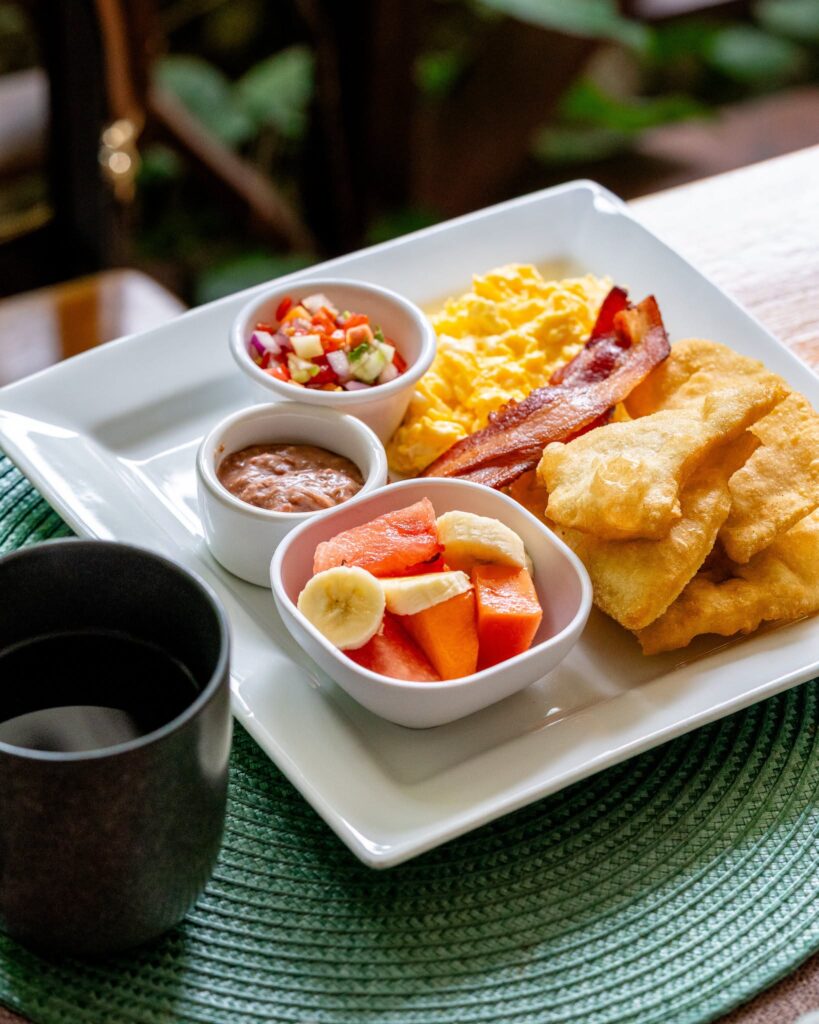
Food miles are the sustainability story travelers can taste. A kitchen supplied by nearby farms and the local market supports the agricultural community around it, cuts the shipping and refrigeration chain, and serves fresher food in the bargain. Ask where the kitchen buys, and favor menus that read Belizean rather than flown in international.
In the Cayo District this test is easy to pass honestly: the San Ignacio market is one of the best in the country, and the properties that cook from it are proud to say so.
Test four: who guides you?
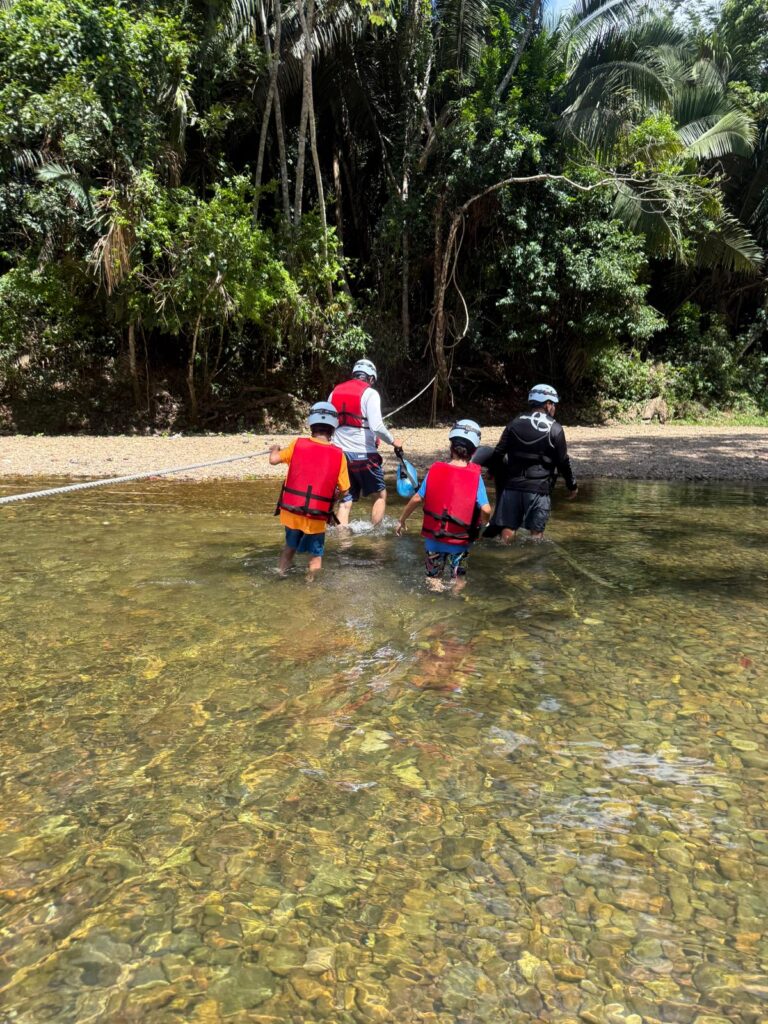
Adventure is half of any Belize trip, and sustainable adventure means local guides: licensed Belizeans whose livelihoods depend on the caves, rivers, reefs, and ancient sites staying healthy, and whose knowledge turns a visit into an education. Choosing locally run tours keeps the economic case for conservation strong, every guide employed is a working argument for protecting the places they show you.
Test five: does the community show up?
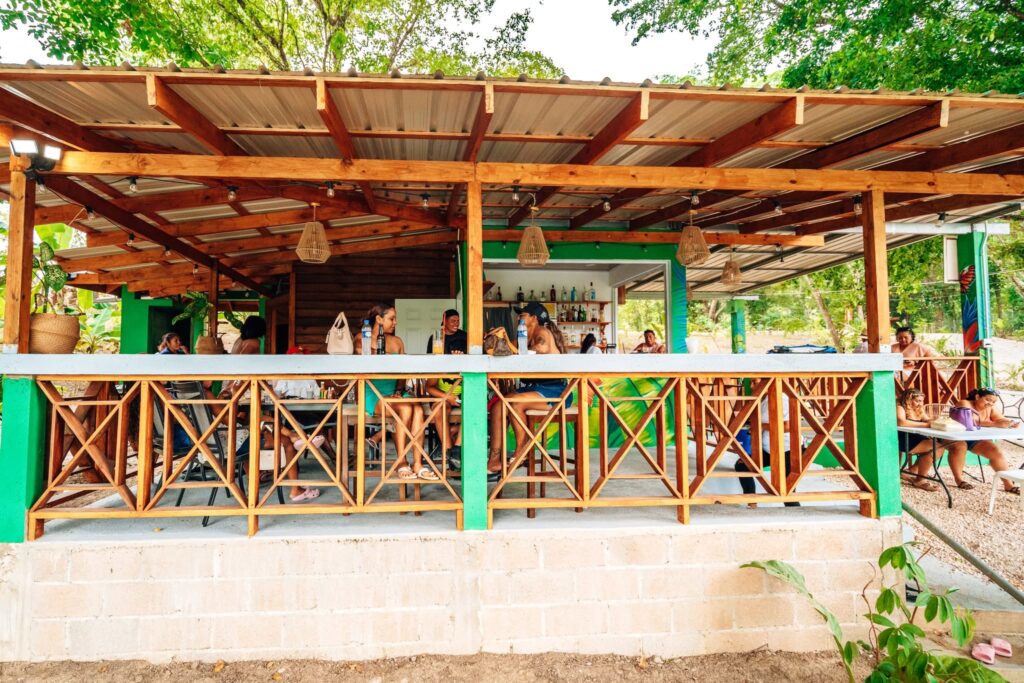
The final test is presence: do locals actually use the place? A restaurant where village families celebrate Sundays, a bar where neighbors watch the game, a property woven into village life rather than walled against it, these are signs of a stay that belongs to its community rather than extracting from it. If the only Belizeans on the property wear uniforms, keep looking.
How Villa Massis answers
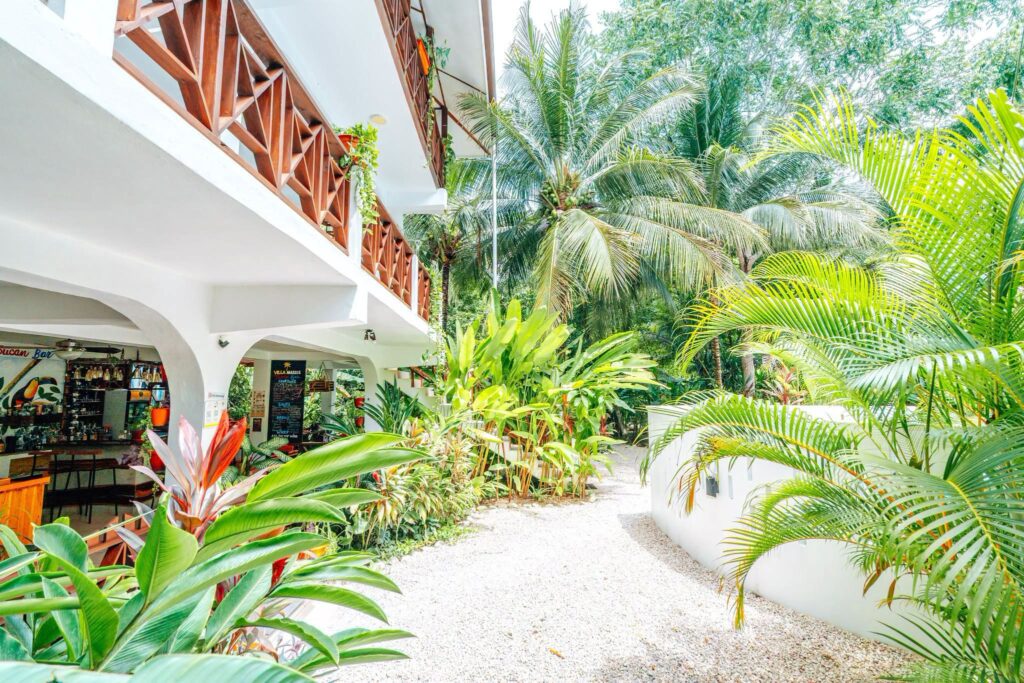
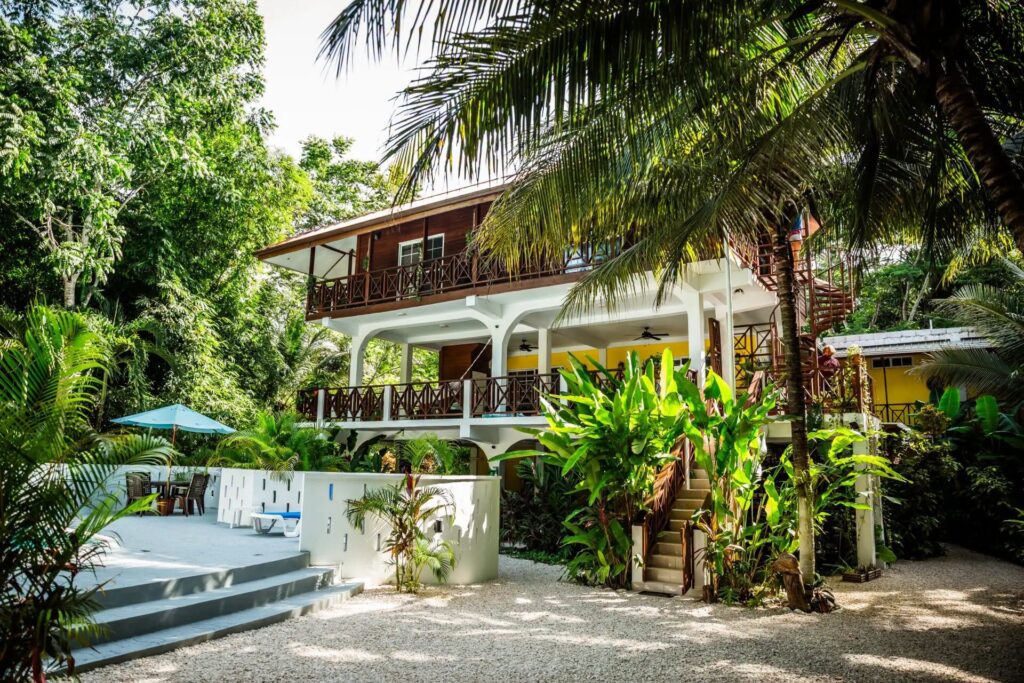
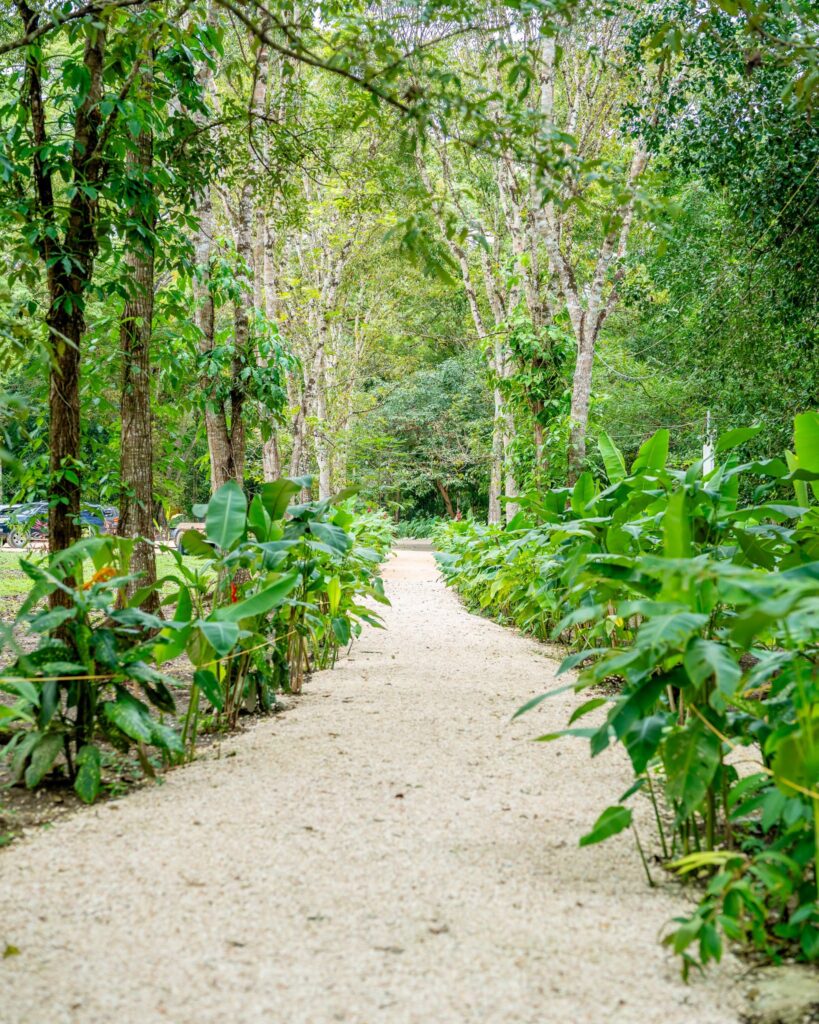
Villa Massis, on the Mopan River in Bullet Tree Falls minutes from San Ignacio, was built to pass these tests rather than advertise them. It is 100% Belizean owned and operated, founded and run by a Belizean family from the area, so the money your stay spends stays in Belize. It is seven villas small, set between the jungle and the river with private nature trails through the greenery rather than over it.
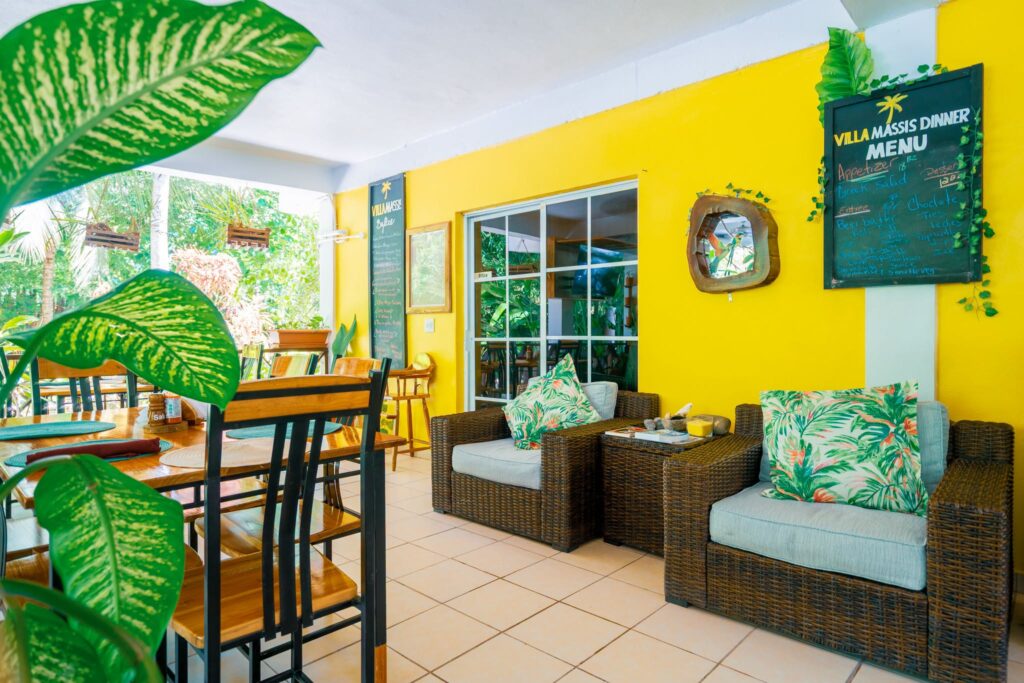
The Villa Massis Waterfront Restaurant and Bar cooks Belizean food from fresh local ingredients, much of it from the San Ignacio market and nearby farms, and the tables at the water’s edge fill with locals and travelers together, Sunday brunch is a village institution as much as a visitor one. Adventures run through Belize Hub Tours with experienced local guides, from Xunantunich and Caracol to the ATM Cave, and cooking classes at the resort pass Belizean food culture directly across the table.
None of this was engineered for a sustainability page. It is simply what a small Belizean family resort looks like when it grows out of its own village, which is rather the point.
Travel better in 2027
Eco minded travel in 2027 is not about guilt or sacrifice. It is about aim: pointing the money a vacation already spends at the people and places that deserve it, and getting a warmer, realer trip in return. Choose locally owned, choose small, eat from the market, hire local guides, and favor the places where the village shows up for Sunday lunch.
Belize makes those choices easy, and the riverbank at Bullet Tree Falls is a fine place to start. Message Villa Massis with your dates and book direct for the best rates, booking direct is itself a sustainability choice, keeping commission money in Belize. The river, the village, and the family that built it will take the trip from there.
Book directly with Villa Massis for the best rates and exclusive adventure experiences.
📱 WhatsApp: +501-614-1506