
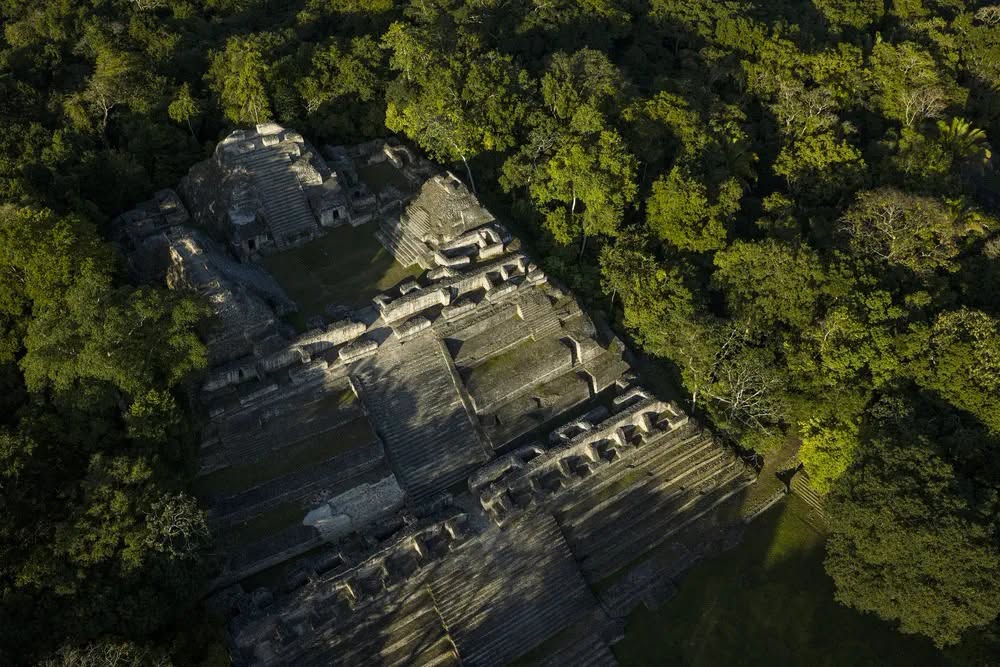
The world’s archaeology community is looking at Belize right now, and specifically at Caracol. Smithsonian Magazine’s November 2026 issue features the ancient city deep in the Chiquibul Forest, spotlighting discoveries that are changing how researchers understand one of the world’s great ancient civilizations, and putting Belize’s largest archaeological site on reading lists around the globe.
For travelers, the timing could not be better: the research is rewriting what we know about the city, access to the site has improved, and the chance to stand inside the story Smithsonian is telling is a two hour adventure from San Ignacio. Here is what the feature reveals, and how to see it for yourself.
A metropolis, not a monument

The feature draws on more than four decades of research by archaeologists Arlen and Diane Chase, whose work has dismantled the old picture of Caracol as a cluster of temples lost in the rainforest. What they have mapped instead is a true metropolis: at its height, more than 100,000 inhabitants, around 36,000 structures spread across 77 square miles, an extensive road network, marketplaces, residential neighborhoods, and sophisticated agricultural infrastructure.
One finding stands out for what it says about daily life: nearly every resident lived within a 20 minute walk of a marketplace. That single detail overturns the long held assumption that Maya cities existed mainly for religion and ceremony. Caracol was a working city, with commerce, neighborhoods, and infrastructure, more than a thousand years ago.
Water, roads, and a kingdom that beat Tikal
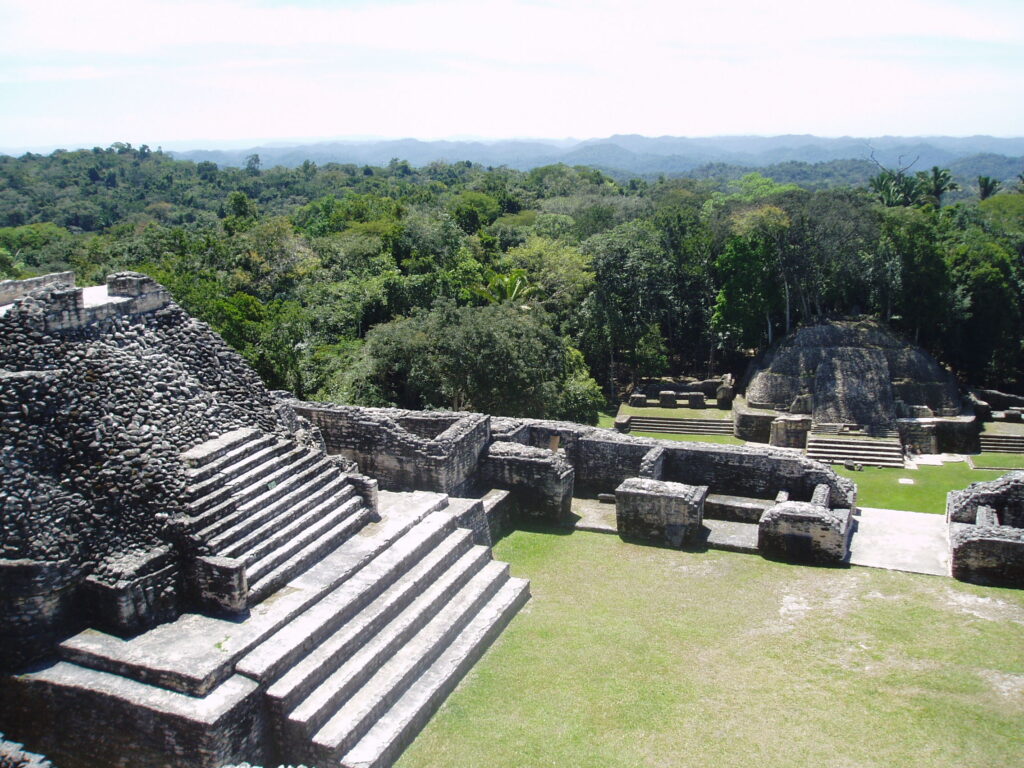
The engineering is its own story. Researchers have identified approximately 1,600 reservoirs across the city, a water management system that sustained a vast population in a rainforest with no rivers running through the urban core. Causeways tied the sprawling city together, moving people and goods across distances modern visitors cover by vehicle.
And Caracol was powerful beyond its borders: the research confirms it as a regional kingdom that defeated mighty Tikal, in present day Guatemala, one of the most storied rivalries of the ancient Maya world. The city tourists walk today was once the capital that humbled its most famous neighbor.
The royal tomb that made headlines
The discoveries keep coming. In 2025, archaeologists uncovered a royal tomb believed to belong to Te K’ab Chaak, the founder of Caracol’s ruling dynasty, containing jade ornaments, elaborate pottery, and fragments of a ceremonial death mask. Finds of this magnitude are rare anywhere in the Maya world, and this one emerged from a site visitors can still explore freely, often with entire plazas to themselves.
Climbing Caana, Belize’s tallest building
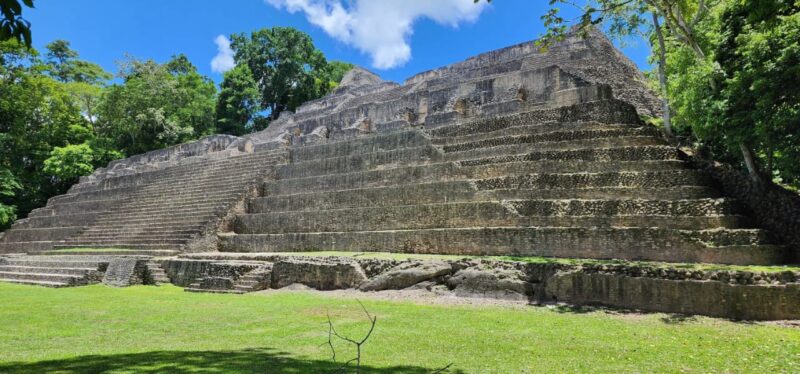
At the center of it all rises Caana, the Sky Palace, standing 141 feet above the jungle floor and still the tallest human made structure in Belize, ancient or modern. Visitors can climb it, and the summit view stretches across unbroken rainforest canopy toward the horizon, the same view Caracol’s rulers commanded at the height of their power.
Few experiences in the Americas compare: a city of 100,000 people, now wrapped in forest, with its greatest building open to anyone willing to climb the steps.
Getting there is easier than it has ever been

The Smithsonian feature also notes what regional travelers already know: road access to Caracol has improved, cutting travel time and opening the site to more visitors. The journey from San Ignacio runs through the Mountain Pine Ridge Forest Reserve, a spectacular drive past pine forest, rivers, and waterfalls, and many visitors pair Caracol with stops at Big Rock Falls, the Rio On Pools, or Rio Frio Cave for one of the great full day adventures in Central America.
Belize Hub Tours runs guided Caracol trips with experienced local guides who bring the Chases’ discoveries to life on the ground: the marketplaces, the reservoirs, the causeways, and the story of the kingdom that beat Tikal. Guided is the way to do Caracol, both for the rugged final stretch of road and for the history that turns stones into a city.
Stay close to the story: Villa Massis

The base for a Caracol adventure is the Cayo District, and Villa Massis puts you in the right spot: on the Mopan River in Bullet Tree Falls, minutes from San Ignacio, where the road to the Chiquibul begins. The resort is 100% Belizean owned and operated, with seven spacious villas, a pool, private jungle nature trails, and the Villa Massis Waterfront Restaurant and Bar right on the water, serving Belizean food from fresh local ingredients.
The rhythm writes itself: an early start for Caracol with a guided trip through Belize Hub Tours, a day among the plazas and the summit of Caana, and a return to cold drinks and dinner beside the river. Xunantunich, Cahal Pech, El Pilar, and the ATM Cave fill the rest of the week, because in Cayo, Caracol is the headliner of a very deep lineup.
With Smithsonian putting Caracol in front of millions of readers heading into the dry season, interest in the site, and in the handful of villas near it, will only grow. Message Villa Massis with your dates and book direct for the best rates and first choice of villas. History this big deserves to be seen in person.
Book directly with Villa Massis for the best rates and exclusive adventure experiences.
📧 info@villamassis.com
📱 WhatsApp: +501-614-1506
